![[Translate to English:] Logistikberatung | IGZ](/fileadmin/user_upload/Blog/2024_und_davor/Logistikberatung/igz-blog-logistikberatung.jpg "[Translate to English:] Logistikberatung | IGZ")
Why professional logistics consulting is so important
Read more



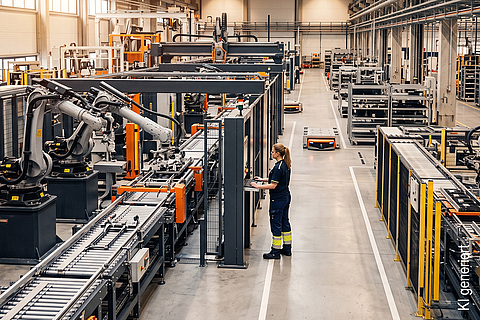
Artificial intelligence is fundamentally transforming manufacturing. The next step in this evolution goes far beyond traditional analysis and forecasting: AI assists users in decision-making, detects deviations early on, and can increasingly intervene in production processes to provide active support.
Machine downtime, quality deviations, and bottlenecks can be detected and assessed more quickly. AI analyzes correlations across large volumes of data, suggests appropriate measures, and helps respond more quickly to changes on the shop floor. Step by step, this leads to smarter and increasingly autonomous production.
A reliable data foundation is essential for high-performance AI—but above all, the right business context is crucial. Only by linking production orders, materials, resources, machine data, and quality data can AI understand relationships and derive relevant recommendations for action.
The SAP Business AI Platform connects applications, data, and AI. SAP Digital Manufacturing (DM) establishes a direct link to the shop floor and provides the context from ongoing production.
With SAP Business AI, AI is increasingly evolving from a mere information and analysis tool into an active component of production processes.
Users receive context-sensitive support directly within the production process. Specialized agents can analyze production situations, detect deviations, and suggest appropriate actions.
For example, AI helps identify bottlenecks, analyze machine downtime, perform "what-if" simulations, and optimize the sequence of production orders.
In the SAP Digital Manufacturing Process Designer, production processes can be created and customized more easily with AI support. The AI can generate appropriate scripts from natural-language requirements, which can then be further refined.
The long-term goal is a closed-loop control system:
detect, analyze, decide, and act. Humans define the goals and guidelines—assistance systems orchestrate the process, and AI agents increasingly take on clearly defined tasks.
In this way, digital manufacturing gradually evolves into autonomous manufacturing.
We look forward to hearing from you!